Showing posts with label Project Gutenberg. Show all posts

29 November 2007

Best Short Stories of 1919, Edward J. O'Brien, Editor

THE BEST SHORT STORIES OF 1919 AND THE YEARBOOK OF THE AMERICAN SHORT STORY EDITED BY EDWARD J. O'BRIEN. BOSTON. SMALL, MAYNARD & COMPANY

This book is available as a free electronic book from Project Gutenberg. It is in the public domain. Release Date: November 11, 2007 [EBook #23445]

What was 1919 like in the USA? It was the end of World War I, the era of the pandemic flu which killed more people than the Great War. In 1919 women in the USA did not have the right to vote; it wasn't until August 26, 1920 that the 19th Amendment was passed, granting suffrage to American women. Prohibition --the Volstead Act -- started, that was the 18th Amendment, in 1919. It went on for 14 years.

Elsewhere in the world: In 1919 the Soviet Union was forming, the first Communist International was held in Moscow on March 2. Ghandi began working in India to resist British rule with nonviolence.

Civilization was changing in 1919. The nineteenth century had seen the industrial revolution, and now the twentieth was truly underway, with a horrible war at the center of its second decade. Many ideas and norms that had made up social, political, and economic conventions were in question, or crumbling to ruins.

The number-one best selling fiction in 1919 was The Four Horsemen of the Apolcalypse [Link to e-book at Electronic Text Center, University of Virginia library. The e-book is publicly accessible.] According to information on the Kingwood College Library website, this book sold for $1.90 -- publishers didn't think the public would pay $2 for a book. (Kingwood College is a Community College in Kingwood, Texas.)

Here is a collection of twenty short stories by writers in that year. Some of their names are familiar to me: Sherwood Anderson and Djuna Barnes for sure, some of the others seem familiar, and the rest are new to me.

The very first story, "The Kitchen Gods," by G. F. Alsop, grabbed my attention because of its title. A few years ago I read and enjoyed a book by Amy Tan called The Kitchen God's Wife, and couldn't help wondering if she had read this story. It tells the story of a polygamous Chinese marriage, and the result of the husband's desire to embrace Christianity. The atmosphere is painted beautifully and economically, however self-conscious the author is in her description of this culture.

I found a little about Alsop, from Contemporary Authors Online, Gale 2004. (I got to this database through my public library system; I don't think it's freely available without a subscription.) Her name was Gulielma Fell Alsop, she lived from 1881 to 1978 (a long life!). The last place she lived was in Vermont. She was a medical missionary in China in 1908, head of the Barnard College Medical Department in 1917. She is listed in Barnard's Alumnae Bibliography.

"An Awakening," by Sherwood Anderson, I found to be an odd kind of story. I am not sure I get the point of it, but it may be due to the 88 years that have elapsed since its publication obscuring certain cultural and social assumptions or norms. The story takes place in Winesburg, Ohio, fictional setting for many of Anderson's stories. (According to Wikipedia, at the preceding link, there is a Winesburg, Ohio, but it is not the fictional Winesburg. Instead, Anderson's Winesburg is modeled on a city named Clyde, Ohio, where Anderson grew up.) In this story we see two men attracted to the same woman. One wins, one loses. I wish someone would explain this one to me. There is a Wikipedia entry for the novel Winesburg, Ohio that provides some clues, I think.

"Willum's Vanilla," by Edwina Stanton Babcock, tells the story of the return of a young man to a rural community in the United States. Mr. and Mrs. Pawket, the elderly agrarian couple who provided this orphaned youngster with a home in his youth, are excited to see their foster son again. "Willum" has been living in Italy, and has married an Italian woman. For his bride, he has ordered the construction of an Italian villa (which word becomes corrupted to the "vanilla" of the title), and to facilitate this project he sends an architect ahead who is to supervise the project, and who will board with Mr. and Mrs. Pawket. While these plans seem solid evidence of young William's solvency, even wealth, events conspire to convince the Pawket's and some of the townspeople that William has fallen on hard times and is returning home from Italy somewhat worse for the wear. This is a perfectly delightful piece, with great use of dialect and terrific characterizations. The story is written with humor, but not without affection, and I enjoyed it immensely.

"A Night Among the Horses," by Djuna Barnes, is a dark tale involving -- apparently -- a man who has married above his station in life and suffers some regret. I'm afraid this one missed me, too.
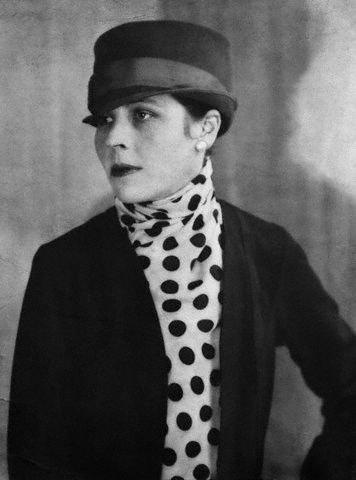
Djuna Barnes

"Long, Long Ago,"
by Frederick Orin Bartlett tells the story of a newspaperman who comes to New York on his vacation to visit the offices of the paper where he got his start. He's been gone five years, and hopes to see at least some of his old co-workers. I found the story mildly amusing, if dated. The opening sentence was confusing:
When the brakeman swung back the door and with resonant indifference shouted in Esperanto "Granderantal stashun," Galbraithe felt like jumping up and shaking the man's hand.

Apparently the reference to Esperanto is a joke. I didn't get it. I thought at first that it was some type of futuristic fiction, which would have been interesting from 1919. But it's not.

The point of "Long, Long Ago" is, in my understanding, that time goes by very quickly in the news business in New York compared to the speed with which it travels in Kansas -- and the vacationing newsman realizes that given this realization, he should get back to Kansas, where he'll live longer.

"Dishes," by Agnes Mary Brownell is a story of domestic life. I enjoyed this story immensely. It's deceptively simple, with simple characters, and plain, vernacular speech. It is the story of a woman who comes into her new husband's home to live with him and his mother. His sister, who used to live with them, has married and gone off to live with her husband. The new wife must take the sister's place, in some ways. It is a story that deals with how our true characters can be suppressed through mundane routines in life, repeated and subscribed to, but perhaps without necessity or meaning.

"The Blood Red One," by Maxwell Struthers Burt, may be an allegorical tale about something to do with World War I. I didn't understand the references, I assume there were certain allusions, but I haven't a clue what they were. It's strange, told with good language, words that flow and sound well. There is a mysterious character who appears and tells two stories about "The Maimed One" -- perhaps this is Woodrow Wilson, or some other world leader during the Great War?

Here's a link to another Maxwell Struthers Burt story, called "The Water Hole." I like it better, and didn't have any trouble at all understanding it. I read about MSB a little bit, and it seems that he was a poet as well as a prose writer, and lived the last part of his life in Jackson Hole, Wyoming, where he ran a dude ranch, among other pursuits. You can find information about him on Wikipedia and other sources, just put his name into Google.

"The Wedding Jest," by James Branch Cabell, is written in a flowery sort of pseudo-Arthurian English, which bothered me and tempted me to skip it, but that would have been a mistake. This story of love, marriage, and ghosts explodes at the end and reveals a deviousness of plot that is not evident until that moment. I recommend patient reading of each and every word, and attention to detail.

"The Wrists on the Door,"
by Horace Fish, could probably be described as a right-to-life fable. Blah, blah, blah...

"Government Goat," by Susan Glaspell, is set in Cape Cod, and has to do mostly with two families, the Cadaras, and the Doanes. Joe Cadara, the father of his family, has been killed at sea. Joe Doane, father of the family next door, is alive and well, albeit employed only on land, at "odd jobs," since his family's fishing business has failed. The families are forced to compare their relative well-being: the Cadaras receive much generous charity, but the Doanes still have a father. When the Cadaras receive a goat from "the government," Joe Doane thinks about who is lucky, and who is not. The story is told with skill, and a great sense of humor.

"The Stone," by Henry Goodman: an evil man hounds his wife from the grave. In 1919, before Stephen King, and all the sensational horror movies, and the Twilight Zone, this probably was sort of frightening, original, even entertaining.

"To The Bitter End," by Richard Matthews Hallet. This is one Hell of a story. Written in seagoing dialect, one elegant phrase upon another, ultimately a sort of long joke with a dry punchline, one can only draw back with awe and admire the skill with which it's told. Here's a little taste:
"And now Elmer and his wife, who were stationed ankle deep in that yellow sea of chips under her prow, could see the brows of the shore gang beaded with sweat, and a look of desperate hurry in the eyes of the youngster coming with the paint pot and painting the bottom of the keel as the blocks fell one by one. Well he might hurry; for sometimes the ship trips the last dozen blocks or so, and thus stepped on with all that tonnage they snap and crackle, and splinters fly in every direction."

Two formidable women are involved, and disaster stalks on the horizon.

"The Meeker Ritual," by Joseph Hergesheimer, is a quaint story of a story told to a sort of cynic-philosopher type, of a family of spiritualists and the strange goings-on within their home. I am not sure that I understood all that was implied in this tale, but I found it vaguely amusing. The Wikipedia entry for Hergesheimer speaks of his "aesthetic" style, and how powerfully descriptive it can be, while at the same time obscure, lacking a depth of characterization.

"The Centenarian," by Will E. Ingersoll, is as corny as Iowa, but beautifully written, and touching in its descriptions and observations of old age and our inevitable decline. The ending has a bit of a twist, though not unpredictable. I looked up 1 August 1914 and found, as I had guessed, that it marks the date of Germany declaring war upon Russia and the mobilization of the Swiss army: the beginning of the Great War.

I found very little about Mr. Ingersoll, except that he was (is?) Canadian, and published some other works.

"Messengers," by Calvin Johnston, is a sentimental story, written in an Irish brogue, of railroads and people, and Duty.

"Mrs. Drainger's Veil," by Howard Mumford Jones (1892-1980), is fascinating and suspenseful. I am a little bit disappointed in the plot, though. Am I addicted to mystery? Perhaps. I don't like to figure out what's happening in a mysterious (if not mystery) story before I am (I think) supposed to. In this story of long years of spite between a mother and daughter, living in seclusion in an ancient, neglected house, I did guess the deep dark secret. But, having said that, I may have just had dumb luck; or perhaps others will not be distracted by this. The writing is excellent and the story is one of the best I've ever read, of any kind.

Howard Mumford Jones appears to have accomplished quite a lot during a long life. In 1965 he received the Pulitzer Prize for General Non-Fiction for his book O Strange New World: American Culture-The Formative Years. He was Professor of English and Abbott Lawrence Lowell Professor of the Humanities at Harvard University.

Howard Mumford Jones sources:
"Under a Wine-Glass," by Ellen N. La Motte. A story told in the tropics, the "Gulf of Siam," from a ship's captain to his passenger, of a "lonely man" with a great gift who, having temporarily lost his gift, searched for the right place to regain it.

"A Thing of Beauty," by Elias Lieberman (1883-1961), in which John Keats himself appears to remind us that we must not be saddened by life, only focus on beauty, and be happy.

"The Other Room," by Mary Heaton Vorse, tells of people who have come to terms with the inevitable. This is one of the stories that makes me feel that I am missing something that might be obvious if I understood an allusion -- but I can't tell you what that might have been!

"The Fat of the Land," by Anzia Yezierska, is a colorfully written rags-to-riches-to -disappointment story, with lots of great dialect and dialogue. I'm not sure it goes anywhere, but I enjoyed reading it. The Jewish Virtual Library has an entry for Yezierska. A Google search of her name will yield much information, such as this.

The editor considers this story to be the best in the collection. In his foreword he says it is "the finest imaginative contribution to the short story made by an American artist this year."

At the end of the collection is an appendix, "The Yearbook of the American Short Story, November 1918 to September 1919." O'Brien explains in detail in his foreword, and in the appendix, how and why he put it together. It is a good picture of how American short fiction looked in that time. What he would think of it today is a topic for amusing conjecture.

14 November 2007

The Four Million, by O. Henry


I suppose I have talked too much about Project Gutenberg of late, so I'll try to keep to the topic here, which is yet another great find at the Project: The Four Million, by O. Henry.

This is the second book of stories from William Sydney Porter, who wrote mostly under the name "O. Henry." There are various stories about the significance of that name; my favorite says that he was friendly with a cat named Henry, who would come when Porter called "Oh, Henry!"

Porter was born in North Carolina, and lived in Austin, Texas, and New York City. The "Four Million" refers to the population of New York at the time -- Porter wrote about ordinary people, he had an eye and ear for the stories in the people's lives all around him. New York was a rich source of material.

Most people know that O. Henry is famous for ending his stories with a twist, or a trick ending. I enjoy this technique as much as anyone, and I admire his use of this difficult form. It didn't seem to restrict his ability to portray human lives and events with a realism and texture that make every one of his short stories a delight to read and re-read.

Another hallmark of this master's writing was the use of unusual polysyllabic words. O. Henry was a lexophile, a lover of words, and obviously loved to put great discoveries from the English language to work in his stories. Here is a sentence from "The Cop and the Anthem:"
"There was an endless round of institutions, municipal and eleemosynary, on which he might set out and receive lodging and food accordant with the simple life."

"Eleemosynary." I first encountered that word in this story, but I've never forgotten it. I think it's a treasure.

My greatest admiration is reserved, however, for the obvious love with which O. Henry drew each of his characters. The street-grifter, the starving stenographer, the young bride, even the "hop-head" who shares his marijuana-induced dream with a young man pining for his lover's forgiveness (and, in delaying him when he has about given up waiting for her, saves the affair) -- all these unlikely people and more are made real and alive with a few masterful sentences from his pen.

I think this is ageless writing, and I hope that many readers young and old will discover and re-discover it. We are very fortunate to have the dedicated people of Project Gutenberg who are willing to make this wonderful art available to anyone with access to the Internet. And, we are very lucky to be English readers who can appreciate the work of O. Henry.

I'll leave you with this, some paragraphs from the opening of Gift of the Magi, which may be O. Henry's best known story. If you haven't read this, go immediately to it and read it all. If you know it, go anyway.

One dollar and eighty-seven cents. That was all. And sixty cents of it was in pennies. Pennies saved one and two at a time by bulldozing the grocer and the vegetable man and the butcher until one's cheeks burned with the silent imputation of parsimony that such close dealing implied. Three times Della counted it. One dollar and eighty-seven cents. And the next day would be Christmas.

There was clearly nothing to do but flop down on the shabby little couch and howl. So Della did it. Which instigates the moral reflection that life is made up of sobs, sniffles, and smiles, with sniffles predominating.

While the mistress of the home is gradually subsiding from the first stage to the second, take a look at the home. A furnished flat at $8 per week. It did not exactly beggar description, but it certainly had that word on the lookout for the mendicancy squad.

In the vestibule below was a letter-box into which no letter would go, and an electric button from which no mortal finger could coax a ring. Also appertaining thereunto was a card bearing the name "Mr. James Dillingham Young." The "Dillingham" had been flung to the breeze during a former period of prosperity when its possessor was being paid $30 per week. Now, when the income was shrunk to $20, the letters of "Dillingham" looked blurred, as though they were thinking seriously of contracting to a modest and unassuming D. But whenever Mr. James Dillingham Young came home and reached his flat above he was called "Jim" and greatly hugged by Mrs. James Dillingham Young, already introduced to you as Della. Which is all very good.


Wikipedia Entry for O. Henry (William Sydney Porter)

Biography and Stories at the Literature Network

04 November 2007

Portrait of the Artist as a Young Man, by James Joyce

Electronic text, available from Project Gutenberg at http://www.gutenberg.org/etext/4217

I have read Portrait at least a couple of times before. Joyce tried publishing it under the name Stephen Hero, rewrote it, and finally succeeded in publishing it in 1916.

This book is considered to be at least semi-autobiographical. No matter, it is an excellent work of what I'll call interior fiction, that is, it is a story that happens mostly within the mind of its central character. This type of fiction is not uncommon from modern writers, but Joyce was one of the first to place the conflict and resolution of a novel within the consciousness or mind of a character, rather than centering upon actions and conflicts between people, places, and things in the visible world. This type of writing is also known as stream of consciousness, and William Faulkner explored the technique extensively in his work.

Portrait is not an easily read, or "accessible" book, but it is far less cryptic or obscure than Joyce's later works, Ulysses, and Finnegan's Wake. It begins with its principal character's babyhood. Stephen Dedalus is hearing his father tell him a children's story:
Once upon a time and a very good time it was there was a moocow coming down along the road and this moocow that was coming down along the road met a nicens little boy named baby tuckoo...
From inside young Dedalus' mind we grow up with him. He goes away to school at Clongowes, but this is cut short by the financial problems that plague his father, and grow worse throughout the story.

When Dedalus and his family move to Dublin (at the beginning the family lives in Blackrock), they have come far down economically. Politics are constantly in the background, and there are strong hints that Dedalus' father's troubles are at least partly political.

Dedalus next attends a Jesuit school. Here he wins a prize for acting in a school play, and is temporarily rather wealthy. He squanders his money rapidly, buying food and gifts for his family, and begins to sample the prostitutes of Dublin. Catholic religious guilt soon overtakes him: There are thousands of words devoted to the brilliant and horrifying descriptions of Hell provided to the students by priests during a "retreat" at school in honor of St. Francis Xavier.
--We are assembled here today, my dear little brothers in Christ, for one brief moment far away from the busy bustle of the outer world to celebrate and to honour one of the greatest of saints, the apostle of the Indies, the patron saint also of your college, saint Francis Xavier. Year after year, for much longer than any of you, my dear little boys, can remember or than I can remember, the boys of this college have met in this very chapel to make their annual retreat
before the feast day of their patron saint....
...The preacher's voice sank. He paused, joined his palms for an instant, parted them. Then he resumed:--Now let us try for a moment to realize, as far as we can, the nature of that abode of the damned which the justice of an offended God has called into existence for the eternal punishment of sinners. Hell is a strait and dark and foul-smelling prison, an abode of demons and lost souls, filled with fire and smoke. The straitness of this prison house is expressly designed by God to punish those who refused to be bound by His laws. In earthly prisons the poor captive has at least some liberty of movement, were it only within the four walls of his cell or in the gloomy yard of his prison. Not so in hell. There, by reason of the great number of the damned, the prisoners are heaped together in their awful prison, the walls of which are said to be four thousand miles thick: and the damned are so utterly bound and helpless that, as a blessed saint, saint Anselm, writes in his book on similitudes, they are not even able to remove from the eye a worm that gnaws it.
Nice stuff.

As the story progresses, we see Dedalus become more and more disillusioned with the Catholic religion that controls his country and countrymen. This causes him much conflict with those around him, not the least of whom is his mother.

The story ends with journal entries. Here is one of them:

APRIL 10. Faintly, under the heavy night, through the silence of the city which has turned from dreams to dreamless sleep as a weary lover whom no caresses move, the sound of hoofs upon the road. Not so faintly now as they come near the bridge; and in a moment, as they pass the darkened windows, the silence is cloven by alarm as by an arrow. They are heard now far away, hoofs that shine amid the heavy night as gems, hurrying beyond the sleeping fields to what journey's end--what heart? --bearing what tidings?

Dedalus will be leaving Dublin, leaving Ireland, even as Joyce did, but it will never leave him, as it never left Joyce. In this book Joyce began some of the techniques that he would develop in Ulysses and Finnegan's Wake, and continued to work on expressing the peculiar relationship with Ireland and Irish culture that characterized his life's work and literary legacy.

Some more information:

Wikipedia Entry for James Joyce: http://en.wikipedia.org/wiki/James_Joyce
Guardian article about Nora, a film about Nora Joyce.

25 October 2007

More Project Gutenberg -- Music

This is not news, as it happened at least a few days ago, but it's news to me. Project Gutenberg has, in addition to the things I recently described, sheet music.

I discovered this on Slashdot. There is an article (linked to the title of this post) there that summarizes, and explains, the source of and issues regarding the storage and publishing of public domain musical stores on Gutenberg.

Curious, I went over to the Project and had a look for myself. I was able to download a compressed file of the Second Brandenburg Concerto. When I extracted it I discovered that it consisted of files with .xml filename extensions.

The computer I used is running Ubuntu 7.04 Desktop. Using Synaptic, it took me about three minutes to locate, download, and install a program with which to read the score. The program I installed is called Noteedit and is, of course, free and open source.

Please understand that I don't have the skill (or the orchestra) to make any use of this, and furthermore, that I spent only a few minutes making a rudimentary investigation. I am sure there are other programs that could be used to read (and edit) the score, and there are probably other online repositories of public domain music.

23 October 2007

Gutenberg Goodies

Something recently reminded me of Project Gutenberg.

This ambitious (and successful) undertaking set out some years ago to scan and electronically publish every out-of-copyright piece of literature they could get their hands on. From what I understand, they scan old books, magazines, and newspapers, and then use OCR software to put the text into ASCII format. Leagues of volunteer proofreaders check on the OCR and make corrections as necessary before releasing the electronic texts. I did this for a while: volunteered as a proofreader, but fell off the habit. This causes me a twinge of guilt; I may have to go beg for my old job back.

Not too long ago I wanted to see if any of Faulkner's writing had risen into the public domain. Apparently none has, although I did find this version of The Sound and the Fury online. But my quest for Faulkner led me to visit Project Gutenberg, and I couldn't help browsing here and there.

The first goodie I encountered was Peter Pan, J. M. Barrie's classic children's book. I looked at the listing and clicked on a link to read it, and then realized that (typical of me) I hadn't been paying close attention. This was an audio book. Available in several formats, one can download this freely (it's all public domain, and Gutenberg offers their transcriptions for free) and enjoy the excellent reading of this book (and many others) by volunteers who have done a terrific job. I didn't listen to the whole thing, I must admit, but what I heard was great. I hope that those of you who voraciously consume My Reading Life will do some research for me and let me know what you find. Both of you.

Next, I wanted to take a look at Dubliners, by James Joyce, once again. Not too long ago I looked up a copy of "The Dead" (the last story in the collection) for a friend, so I was fairly certain that the book must be in the public domain. It is, and this past weekend I found myself reading the whole thing again, for what must be at least the third time. It seems so obvious to say that Joyce was one hell of a great writer, but he was. His prose is poetry:

In the evening my aunt took me with her to visit the house of mourning. It was after sunset; but the window-panes of the houses that looked to the west reflected the tawny gold of a great bank of clouds.
From "The Sisters," by James Joyce.The stories in Dubliners are:
  1. The Sisters
  2. An Encounter
  3. Araby
  4. Eveline
  5. After The Race
  6. Two Gallants
  7. The Boarding House
  8. A Little Cloud
  9. Counterparts
  10. Clay
  11. A Painful Case
  12. Ivy Day in the Committee Room
  13. A Mother
  14. Grace
  15. The Dead
Having finished Dubliners for now, I've immersed myself in Portrait of the Artist as a Young Man. From that novel comes this beautiful bit:

Without waiting for his father's questions he ran across the road and began to walk at breakneck speed down the hill. He hardly knew where he was walking. Pride and hope and desire like crushed herbs in his heart sent up vapours of maddening incense before the eyes of his mind. He strode down the hill amid the tumult of sudden-risen vapours of wounded pride and fallen hope and baffled desire. They streamed upwards before his anguished eyes in dense and maddening fumes and passed away above him till at last the air was clear and cold again.
The Joyce catalog at Gutenberg also includes Ulysses and Chamber Music. Chamber Music is poetry; I think it could be accurately described as a long poem in 36 parts. I can't say anything about it, I'm very poor at reading or evaluating poetry, I fear I'm a little too stupid for it. Ulysses is one of my great loves, and when I've finished savoring Portrait, I'll probably dive back into Ulysses (1.49MB of ASCII text!).
Grey horror seared his flesh. Folding the page into his pocket he turned into Eccles street, hurrying homeward. Cold oils slid along his veins,chilling his blood: age crusting him with a salt cloak. Well, I am here now. Yes, I am here now. Morning mouth bad images. Got up wrong side of the bed. Must begin again those Sandow's exercises. On the hands down. Blotchy brown brick houses. Number eighty still unlet. Why is that? Valuation is only twenty-eight. Towers, Battersby, North, MacArthur: parlour windows plastered with bills. Plasters on a sore eye. To smell the gentle smoke of tea, fume of the pan, sizzling butter. Be near her ample bedwarmed flesh. Yes, yes.


Apparently they haven't gotten around to Finnegan's Wake.

24 December 2006

Alice in Wonderland, and Through the Looking Glass, by Lewis Carroll

December 24 2006 (04:05:00)

One pill makes you larger, and one pill makes you small,
And the ones that mother gives you, don't do anything at all,
Go ask Alice, when she's ten feet tall.
--White Rabbit, Jefferson Airplane.

If you haven't read Alice and/or Through the Looking Glass, don't put it off. If you have read it, do it again. It doesn't take long, that's for sure. I found this old paperback on a rainy Sunday afternoon and was soon lost down the rabbit hole.

There's plenty written about these works and little that a person of my education and experience would be able to add to the critical analysis of Carroll's whimsical fiction. It's well known that these stories were written primarily to entertain children, some of them very specific children with whom Lewis Carroll (the pen-name of Charles Lutwidge Dodgson) was acquainted, including young Alice (Liddell) herself. And it's also common knowledge that there are other levels, and jokes, to the stories, more accessible to adults and particularly to adults of the time, culture, and social class in which Carroll lived.

What attracts me to the story of Alice and her adventures in the Looking Glass world is that this is part of the quintessential English literature of childhood. Along with the Chronicles of Narnia, Baum's Oz classics, and others, these books find some place in most English-speaking children's mythology -- or at least I think they still do! -- and their landscapes and population are ever in our imaginations. When one sees an impatient, harried person checking his watch, one thinks of the White Rabbit: "Oh dear...I shall be late..." Imperious self-important tyrants always have something of the Red Queen about them, and who has not been in a conversation that reminded him of the one between the Hatter and the March Hare, with the Dormouse sleeping between them?

"Alice felt dreadfully puzzled. The Hatter's remark seemed to have no sort of meaning in it, and yet it was certainly English."

Through the Looking Glass, the second work, is said to be understandable as a complete chess game. It is also obviously rich with puns and inside jokes, and probably a great deal of humor at the expense of personages long deceased. This is all a great monument to the genius that called himself Lewis Carroll, but for me I value its capture of the time of life when we have the leisure and openness of mind to contemplate and observe the world that exists in our mirrors, when we think about whether the flowers mind being tethered to the ground, and when we have the imagination to conceive of a Rocking Horse Fly, "...made entirely of wood, and gets about by swinging itself from branch to branch..."
More Information and Where You Can Read the Books:

* The entire text of Alice's Adventures in Wonderland and Through the Looking Glass, courtesy of the Gutenberg Project.
* This site is sort of an Alice fan-club site, I suppose; there's a lot of Alice-related information and much evidence of her influence on the world in which we live.
* Lenny's Alice in Wonderland Site seems a good resource for background and analysis of the work, nicely designed with great respect for the tales. Lenny is not above referring to the Disney movie that has no doubt been responsible for introducing millions to Alice and her adventures.